Think Big Muscles are the Key to Better Movement in Older Adults? Not so Fast!
Slowing down may not just be an aging thing. Quite literally, walking slower could be an indicator of health problems in your golden years, even more than muscle mass.
That’s the conclusion of a new study out of the University of Central Florida recently published in a special edition of the Journal of Science in Sport and Exercise (opens in a new tab).
It’s been long established that muscle weakness in older adults predicts illness and impacts quality of life. Historically, scientists have attributed much of the loss of physical function observed during aging to a decline in muscle mass. Less muscle meant more weakness.
But the new study, funded by the National Strength and Conditioning Association Foundation, suggests that muscle mass and muscle strength may provide different information about the functional status of older adults.
“The central nervous system (brain and spinal cord) controls our skeletal muscles,” says Matt Stock (opens in a new tab), an associate professor of physical therapy (opens in a new tab) and principal investigator of the study. “But if the nervous system’s ability to control the muscle is impaired, you could have big muscles that are unable to function well.”
Fast gait (walking) speed may be a particularly important health indicator in your 70s, because it relies on rapid nervous system activity, balance, and coordination. The ability to cross the street in busy traffic, chase after the grandkids and prevent a fall are scenarios where rapid movements are crucial in the golden years.
Dr. Stock ran several experiments in his Neuromuscular Plasticity Laboratory (opens in a new tab) at UCF as part of the study. He had men and women between their 20s and 80s walk a short distance as quickly as possible. His team also measured leg strength, muscle mass and recorded walking speed at multiple distances.
“The results showed large differences in fast gait speed and muscle strength between younger and older adults, but leg muscle mass was surprisingly similar,” Stock says. “Furthermore, in older adults, there was no association between fast gait speed and leg muscle mass, meaning that those with greater muscle mass did not walk faster. Broadly speaking, these results highlight a potential dissociation between muscle mass and function in older adults.”
Stock notes that these findings are similar to other previous studies, as well as another more recent study from his laboratory that has yet to be published.
In practical terms that means you should not only exercise to build muscle, but also focus on movement quality, with an emphasis on functional activities in old age. Monitoring walking speed is important as well because if that slows down without an obvious reason it could spell trouble in your 70s and beyond.
Understanding the role of muscle mass and gait in the human body isn’t just important for seniors. It’s also of interest to NASA and other space agencies looking to put humans on the moon and beyond for long periods of time. Muscle tends to deteriorate in space, because of the lack of gravity. Understanding the relationship will not only help seniors keep functionality, but could also help future astronauts as they explore our solar system and beyond.
Others on the study team include Assistant Professor of Kinesiology Brennan J. Thompson from the Neuromuscular Research Lab at Utah State University and Assistant Professor of Health Sciences Eric J. Sobolewski from the Molnar Human Performance Laboratory at Furman University.
Stock joined UCF in 2016. He is an associate professor in the School of Kinesiology and Physical Therapy (opens in a new tab) in the College of Health Professions and Science (opens in a new tab). His early love of sports and science led to his curiosity about the human body’s physical limits and ability to adapt. These days he works alongside a team of hardworking UCF students in the Neuromuscular Plasticity Laboratory (opens in a new tab). Together, they collaborate on exciting research projects in the area of neuromuscular physiology with an emphasis on the adaptations associated with aging, sarcopenia, resistance training, and muscle disuse. Stock has a Ph.D. from the University of Oklahoma and has published more than 75 peer-reviewed articles. He is a Fellow of the National Strength and Conditioning Association and was named the organization’s Educator of the Year in 2017.
Share This Article

New UCF Graduate Student Association Leadership Elected for 2026–2027
The results of the 2026–2027 UCF Graduate Student Association (GSA) officer elections are in! We are excited to announce the newly elected officers who will take on leadership roles and...
Latest News
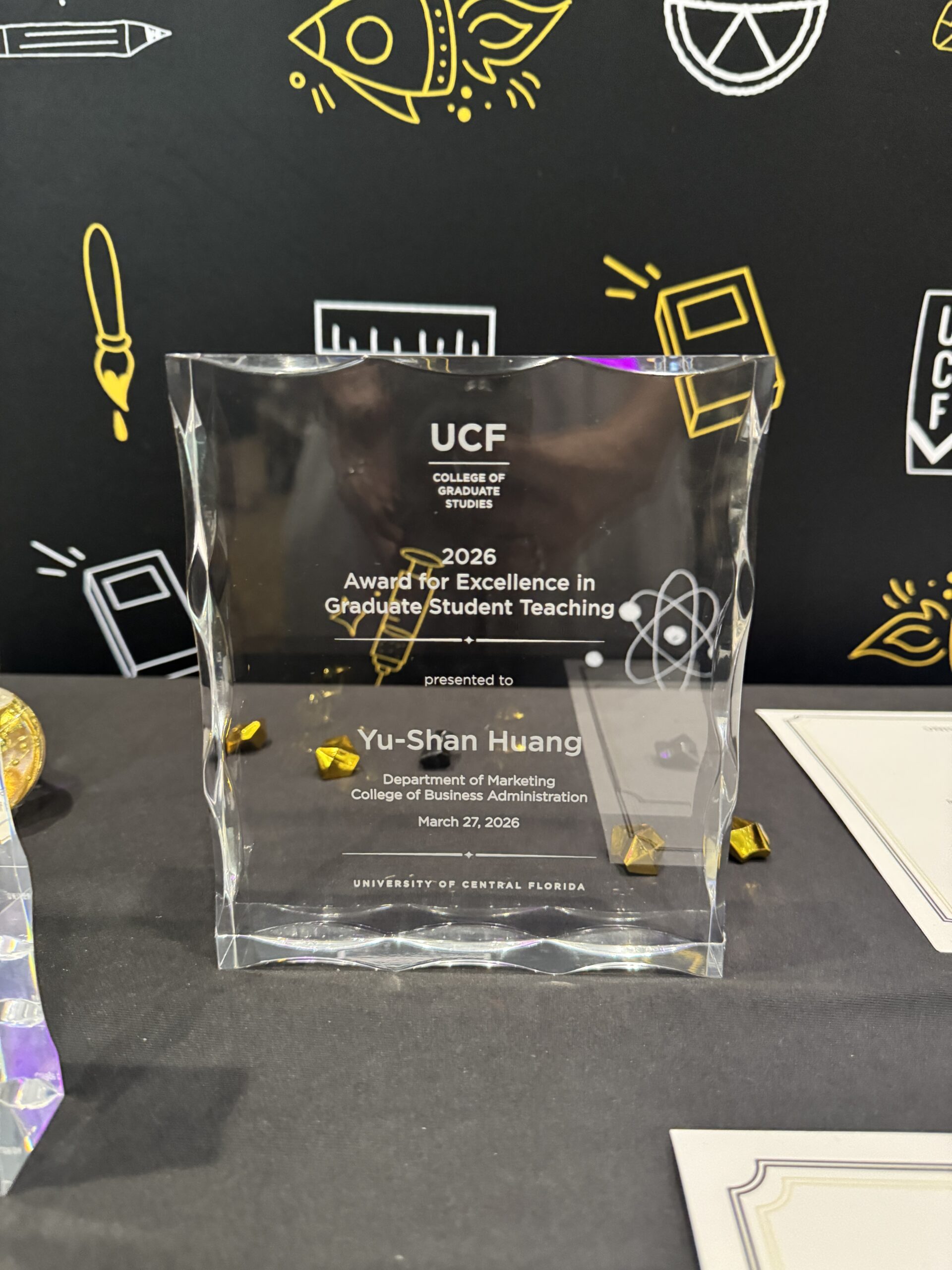
Celebrating Excellence in Research, Teaching and Service
Last week, the University of Central Florida recognized graduate faculty and students for excellence in research, teaching, leadership, and service. These awardees are some of UCF’s top scholars and educators....
Day Two Winners: Student Scholar Sympsosium
The Student Scholar Symposium, part of UCF’s 20th Annual Student Research Week, continued March 26 in the Pegasus Ballroom with hundreds of research posters during Sessions 4–6. Judges evaluated presentations...
Student Scholar Symposium: Day One Winners
The Student Scholar Symposium, UCF’s premier research showcase, runs March 25–26 in the Pegasus Ballroom. Day One featured hundreds of research posters across three sessions, with judges evaluating presentations and...
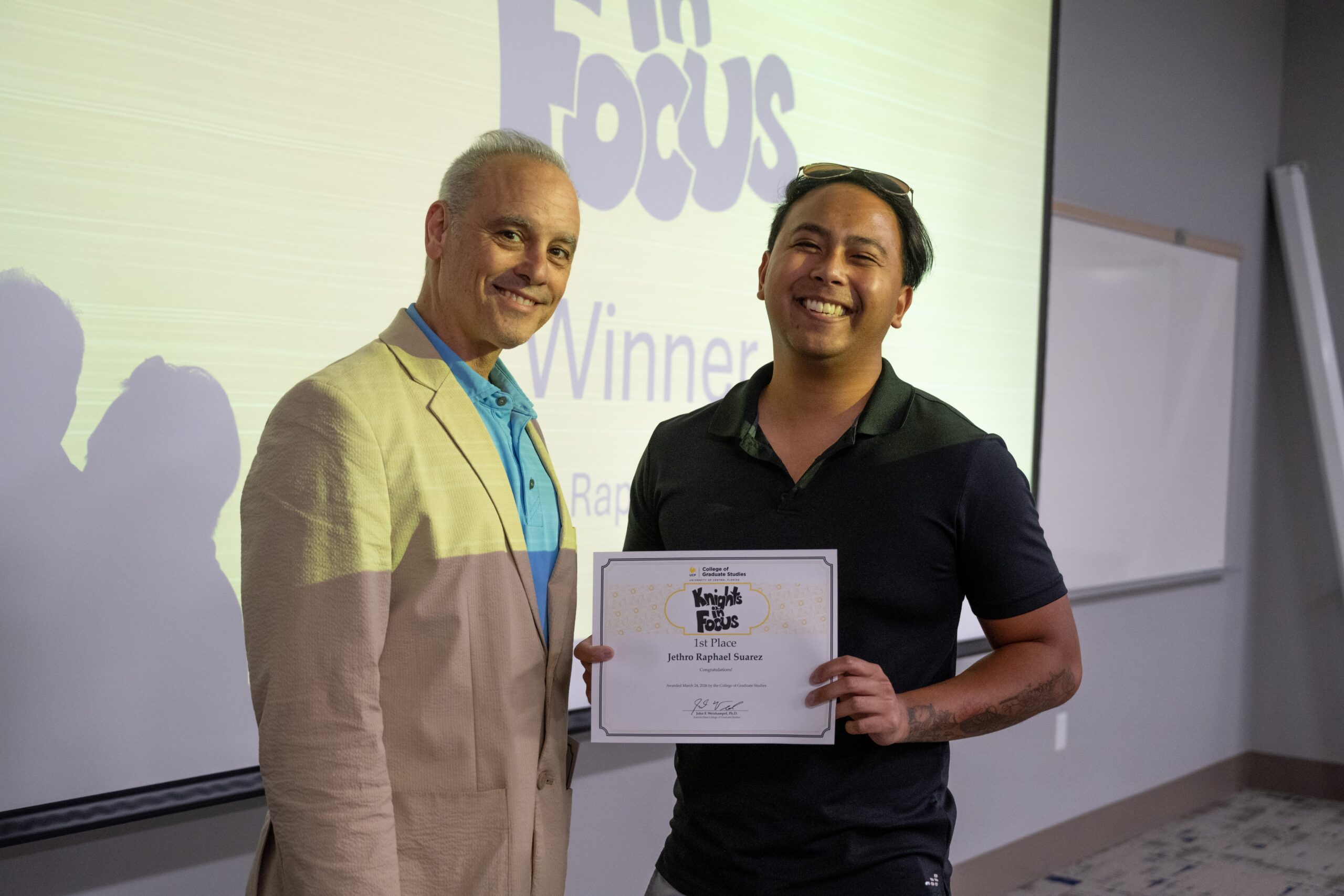
Knights in Focus Celebrates Graduate Student Endeavors
Communicating complex research in under 60 seconds demands precision and creativity. Graduate students at UCF met that challenge through Knights in Focus. This new video competition encourages participants to present their...